
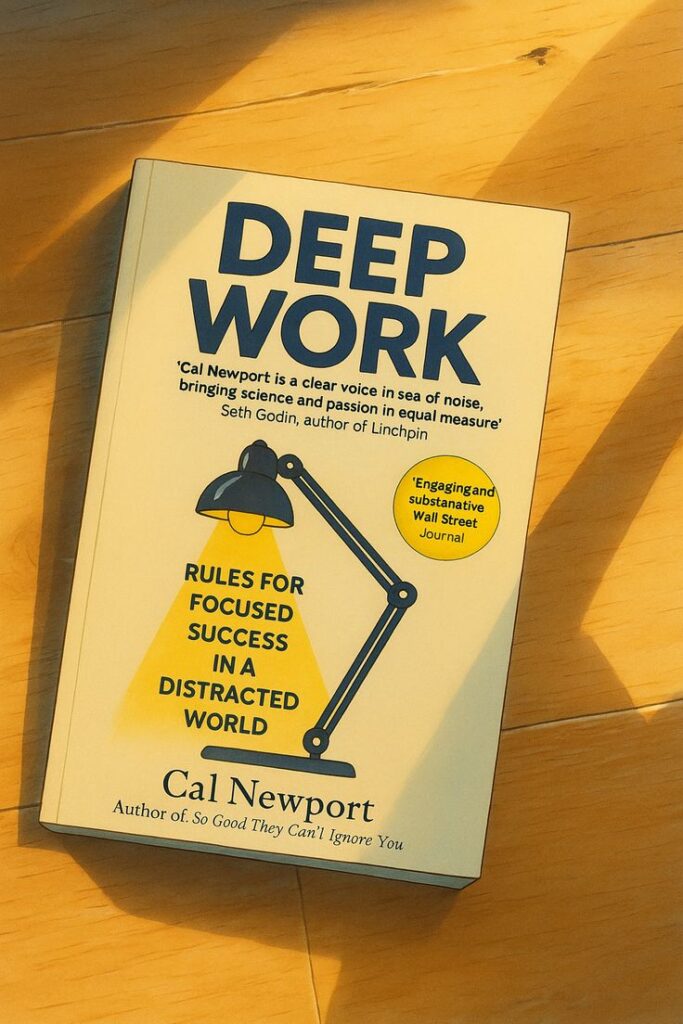
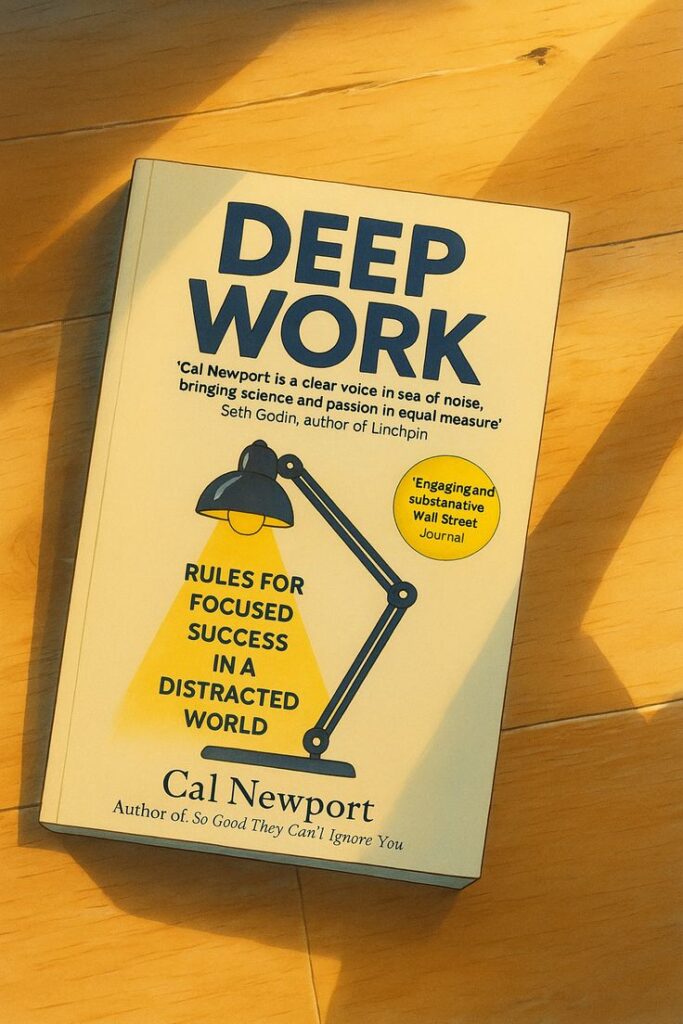
The Deep Work book is one of the most influential productivity books of modern times. Written by Cal Newport, this book addresses one of the biggest challenges today—lack of focus. In a world full of notifications, social media, and constant distractions, the Deep Work book explains why the ability to concentrate deeply is becoming increasingly rare and incredibly valuable.
Instead of promoting hustle or multitasking, the Deep Work book teaches readers how to build a habit of focused, meaningful work that leads to real success.
What Is the Deep Work Book About?
At its core, the Deep Work book is about developing the skill of deep focus—the ability to work without distraction on cognitively demanding tasks. Cal Newport defines deep work as work performed in a state of intense concentration that pushes your abilities to their limit.
The book contrasts deep work with shallow work, which includes emails, meetings, and social media—tasks that feel busy but produce little long-term value. According to the Deep Work book, those who master deep focus will outperform others in almost every profession.
Why the Deep Work Book Is So Powerful
One reason the Deep Work book stands out is its relevance. Whether you are a student, professional, freelancer, or creator, distractions are everywhere. The book explains how constant context switching reduces productivity and damages mental clarity.
The Deep Work book is powerful because it:
- Explains the science of focus
- Shows how distractions affect the brain
- Provides practical rules to build deep focus
- Encourages meaningful, high-quality work
Rather than vague motivation, this productivity book offers clear strategies that can be applied immediately.
The Four Rules of Deep Work
A major highlight of the Deep Work book is the four-rule framework designed to help readers build focus:
- Work Deeply – Create rituals and routines that support concentration
- Embrace Boredom – Train your brain to resist constant stimulation
- Quit Social Media – Remove low-value distractions
- Drain the Shallows – Reduce time spent on shallow tasks
These rules help readers take control of their attention and energy in a systematic way.
Why the Deep Work Book Is Life-Changing
What makes the Deep Work book life-changing is its shift in perspective. It teaches that success does not come from being busy—it comes from doing important work deeply and consistently. Many readers realize that they are capable of producing far more value when they protect their focus.
The book also encourages a healthier relationship with technology. Instead of rejecting technology completely, the Deep Work book teaches intentional use, helping readers regain mental clarity and reduce stress.
Who Should Read the Deep Work Book?
The Deep Work book is ideal for:
- Students preparing for competitive exams
- Professionals working in high-pressure roles
- Freelancers and remote workers
- Writers, designers, and creators
- Anyone struggling with distractions
If you want to improve concentration, productivity, and work quality, this book is a must-read.
Is the Deep Work Book Still Relevant Today?
Absolutely. In fact, the Deep Work book is more relevant than ever. With remote work, smartphones, and social media dominating daily life, the ability to focus has become a competitive advantage. Those who practice deep work can learn faster, produce better results, and stand out in their careers.
Final Thoughts
The Deep Work book is not just about productivity—it’s about reclaiming your attention and doing work that truly matters. Cal Newport’s insights encourage readers to slow down, focus deeply, and create meaningful output in a noisy world.
If you want to improve your focus, reduce distractions, and achieve real professional growth, this book deserves a place on your reading list.